Choosing between a bricks-and-mortar floor and a digital lobby isn’t about which one feels fancier on a Friday arvo. It’s about what kind of session you actually want to run. Jane Corrie spent four decades moving between Melbourne clubs, Sydney pits, regional Queensland venues and a Macau training floor, and she still tells new dealers the same thing: the environment dictates the rhythm before the first card hits the felt. A physical casino asks you to dress, travel, queue and read a room; an online lobby asks you to trust a screen, read a layout and manage your own pace. Both can be solid, but they solve different problems for different players.
Interface and everyday usability on the floor versus the screen
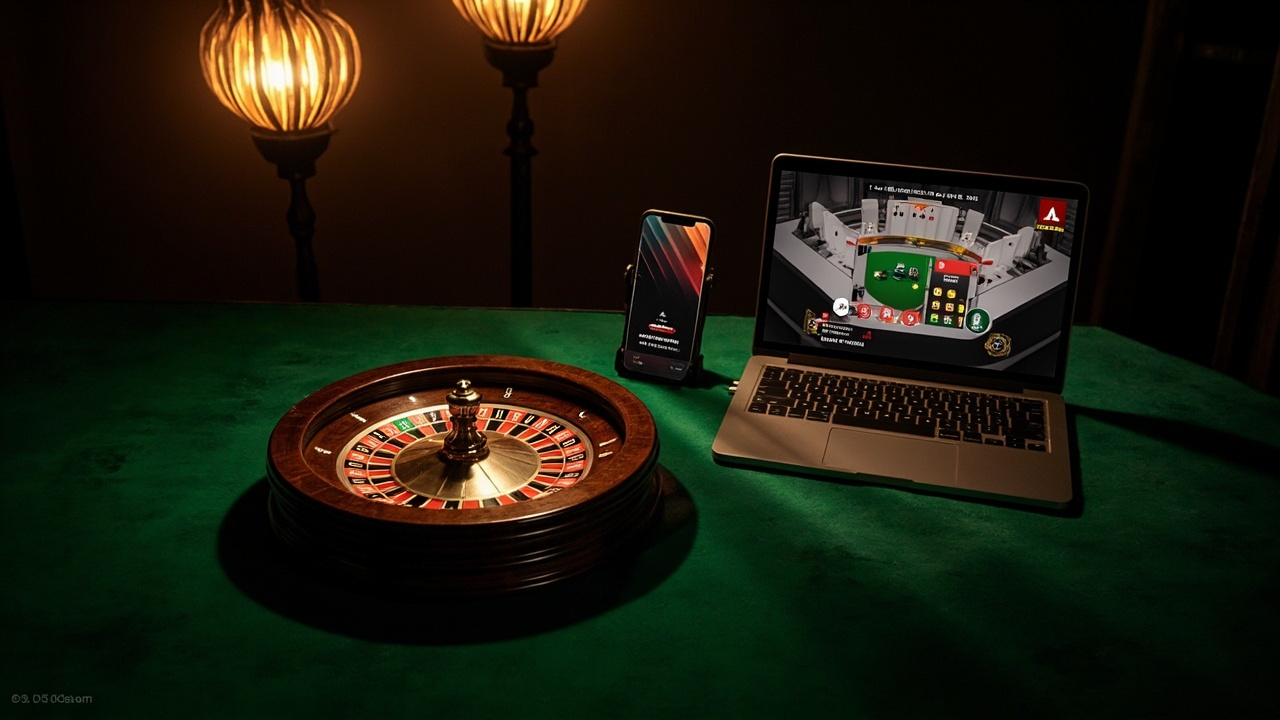
Walking into a Melbourne venue on a busy weekend, the first thing you notice is how the room does the organising for you. High-traffic tables sit near the entrance, quieter lounges sit further back, and the floor staff read the shift before you say a word. That physical structure is hard to replicate. Jane Corrie once shut down a rookie’s plan to rearrange a blackjack table during peak hours because the pit flow depended on predictable sightlines, not clever furniture. Online lobbies try to mirror that with visual hierarchy: prominent game tiles, quick-filter tabs, and clearly labelled cash zones. When a lobby is well localised for Australian players, the language, currency and help prompts sit where you expect them, not buried under generic global text. When it isn’t, you spend minutes hunting for a simple deposit or a responsible-gambling toggle instead of starting a session.
A good interface removes friction without pretending the game is simpler than it is. You want navigation that answers three questions fast: where’s the game, what’s the stake range, and how do I adjust my limits. If the lobby makes you tap through three menus to find a table or a machine category, it’s not polished – it’s just hiding the work. For a clubhouse casino login australia, that first entry screen matters because it sets the tone for the whole session. A clean sign-in, a visible balance, and a straightforward game list tell you the operator has thought about the ordinary player, not just the bonus chaser.
- Navigation that puts the most-played table games and machine categories within one or two taps
- Localised language and Australian dollar display that don’t require manual conversion each session
- Visible account and limit controls that sit near the balance, not inside a buried settings page clubhouse casino login australia
- Search that filters by stake, variant and availability instead of dumping every title into one long list
Localisation, language and currency when the screen replaces the pit
Localisation is where a digital lobby either earns its keep or starts feeling like a translated brochure. A well-set-up Australian page shows dollars, sensible stake steps and help text that reads like it was written for the room it’s in, not copied from another market. Jane Corrie’s training notes always stressed that a dealer’s first job is to match the table to the crowd, and the same principle applies to a lobby: the wording, the pacing and the support options should fit the people actually sitting in front of the screen. If the help section talks about a different regulatory setup or uses phrasing that feels lifted from another region, players notice, even if they can’t name the exact mismatch. Drop-phygital
Currency handling is the everyday test. You want a balance that behaves like the money you loaded, with stake ranges that make sense for a casual session and a clear record of what you’ve staked and what’s left. When localisation is done properly, you don’t have to mentally translate every screen. When it’s thin, you’re doing the operator’s job for them, converting symbols, re-reading labels and second-guessing whether a button means “play” or “adjust.” That extra mental load is the quiet cost of a lobby that hasn’t been built with the local player in mind.
Real conditions, limits and trade-offs players actually feel
No format removes the limits; it just moves them. A physical venue has opening hours, travel time, dress expectations and a visible crowd that can slow you down or speed you up depending on the shift. Jane Corrie used to tell new pit staff that a packed Saturday floor is not a problem to solve but a condition to manage, because the pace of the room changes what players will tolerate and what they will walk away from. Online, the limits are different but no less real. You’re responsible for your own breaks, your own session length and your own exit, because the lobby won’t tap you on the shoulder when the pace gets too fast.
That self-management is the real trade-off. A digital session can start and stop in minutes, which is convenient when you only want a short run, but it also means the boundary between “one more hand” and “I should stop” sits entirely on your side of the screen. A physical floor gives you natural pauses – walking to the bar, waiting for a seat, watching the room change over – but it also asks for time and movement you may not have. Neither format is inherently calmer. They just distribute the discipline differently, and the better choice is the one that matches how you actually behave when the cards or reels are running.
Chloe Graham, Responsible Gambling Adviser, Coral Coast Interactive, puts it plainly: “The format doesn’t make the session safer by itself; it only changes where the pause button lives, and players do better when that pause is easy to find and easy to use.”
How support, registration and loyalty play out in each setting
Support is where the two formats diverge most in everyday use. In a venue, help is physical and immediate: a floor person, a supervisor, a visible process for a dispute or a payment question. You can see who’s handling the shift and what the next step looks like. Online, support has to earn that same confidence through clear channels, readable response times and staff who can actually follow a transaction trail. Benjamin Clarke, Product Analytics Lead, Harbour Bet Insights, notes that the sessions which stay healthy are usually the ones where a player can find an answer without restarting the whole journey: “When support is buried behind three menus, people stop asking questions they should be asking, and that’s when small confusion turns into a longer session than intended.”
Registration and loyalty follow the same logic. A venue builds its relationship through face-to-face rhythm: a regular gets recognised, a card gets stamped, a complaint gets handled by someone who saw the shift. An online programme has to replicate that continuity through a clear account history, a visible points or tier structure, and a way to check what you’ve earned without digging through a generic email. Aaron Edwards, Customer Experience Lead, Pacific Player Protection Institute, sees the pattern in how people behave when the process is straightforward: “Players stick with a product longer when the sign-up and the rewards path don’t feel like two different companies, because continuity is what makes the whole thing usable week to week.”
A well-run online programme doesn’t try to replace the social feel of a room; it gives you a clean record of your play, your limits and your rewards, so the relationship stays readable even when nobody is standing behind the table. A well-run venue doesn’t rely on charm alone; it keeps the shift organised, the help visible and the pace honest. Both can work. They just ask different things of you before you sit down.